Monday, March 12, 2018

Saudis Said to Use Coercion and Abuse to Seize Billions

RIYADH, Saudi Arabia — Businessmen once considered giants of the Saudi economy now wear ankle bracelets that track their movements. Princes who led military forces and appeared in glossy magazines are monitored by guards they do not command. Families who flew on private jets cannot gain access to their bank accounts. Even wives and children have been forbidden to travel.
In November, the Saudi government locked up hundreds of influential businessmen — many of them members of the royal family — in the Riyadh Ritz-Carlton in what it called an anti-corruption campaign.
Most have since been released but they are hardly free. Instead, this large sector of Saudi Arabia’s movers and shakers are living in fear and uncertainty.
During months of captivity, many were subject to coercion and physical abuse, witnesses said. In the early days of the crackdown, at least 17 detainees were hospitalized for physical abuse and one later died in custody with a neck that appeared twisted, a badly swollen body and other signs of abuse, according to a person who saw the body.
In an email to The New York Times on Sunday, the government denied accusations of physical abuse as “absolutely untrue.”
 
 
To leave the Ritz, many of the detainees not only surrendered huge sums of money, but also signed over to the government control of precious real estate and shares of their companies — all outside any clear legal process.
The government has yet to actually seize many of the assets, leaving the former detainees and their families in limbo.
One former detainee, forced to wear a tracking device, has sunk into depression as his business collapses. “We signed away everything,” a relative of his said. “Even the house I am in, I am not sure if it is still mine.”
As the architect of the crackdown, Crown Prince Mohammed bin Salman, prepares to travel to the United States this month to court American investment, Saudi officials are spotlighting his reforms: his promise to let women drive, his plans to expand entertainment opportunities and his moves to encourage foreign investment. They have denied any allegations of abuse and have portrayed the Ritz episode as an orderly legal process that has wound down.
But extensive interviews with Saudi officials, members of the royal family, and relatives, advisers and associates of the detainees revealed a murkier, coercive operation, marked by cases of physical abuse, which transferred billions of dollars in private wealth to the crown prince’s control.
Corruption has long been endemic in Saudi Arabia, and many of the detainees were widely assumed to have stolen from state coffers. But the government, citing privacy laws, has refused to specify the charges against individuals and, even after they were released, to clarify who was found guilty or innocent, making it impossible to know how much the process was driven by personal score settling.
Part of the campaign appears to be driven by a family feud, as Crown Prince Mohammed presses the children of King Abdullah, the monarch who died in 2015, to give back billions of dollars that they consider their inheritance, according to three associates of the Abdullah family.
And although the government said the campaign would increase transparency, it has been conducted in secret, with transactions carried out in ways that avoid public disclosure, and with travel bans and fear of reprisals preventing detainees from speaking freely.
Most people interviewed for this article spoke on the condition of anonymity to avoid the risk of appearing to criticize Crown Prince Mohammed.
The government said in its email that “the investigations, led by the Attorney General, were conducted in full accordance to Saudi laws. All those under investigation had full access to legal counsel in addition to medical care to address pre-existing, chronic conditions.”
The government, and several Saudi officials contacted separately, declined to answer further questions about the crackdown.
They have argued, however, that it was a necessarily harsh means of returning ill-gotten gains to the treasury while sending a clear message that the old, corrupt ways of doing business are over. And they have defended the process as a kind of Saudi-style plea bargain in which settlements were reached to avoid the time and economic disruption of a drawn-out legal process.
In a separate statement on Sunday announcing new anti-corruption departments in the Attorney General’s office, the government said that King Salman and Crown Prince Mohammed “are keen to eradicate corruption with utmost force and transparency.”
But the opaque and extralegal nature of the campaign has rattled the very foreign investors the prince is now trying to woo.
“At the start of the crackdown they promised transparency, but they did not deliver it,” said Robert Jordan, who served as American ambassador to Saudi Arabia under President George W. Bush. “Without any kind of transparency or rule of law, it makes investors nervous that their investments might be taken and that their Saudi partners might be detained without any rationale to the charges.”
Photo
Prince Alwaleed bin Talal, one of the world’s wealthiest men, giving an interview to Reuters from his suite at the Ritz-Carlton in January. “Everything’s fine,” he said. Credit Reuters

A Five-Star Jail

Before dawn on Nov. 4, Prince Alwaleed bin Talal, the kingdom’s most famous investor and one of the world’s richest men, was asleep at a desert camp where he repairs to relish the simple life when he was summoned by the royal court to see King Salman, according to two associates of his family. It was a strange request for that hour, but one does not ignore the king’s wishes, so he returned to Riyadh, where his guards were dismissed, his phones taken from him and he was locked in the Ritz.
Over the next 24 hours, similar calls lured in more than 200 people, including some of the kingdom’s wealthiest and most powerful men. They included Prince Mutaib bin Abdullah, a son of King Abdullah and head of one of the country’s three main security services; Fawaz Alhokair, who owned the kingdom’s franchises of Zara, the Gap and dozens of other stores; Salah Kamel, an elderly businessman from the Red Sea port city of Jidda; and many other princes, businessmen and former government officials.
Most ended up in the Ritz, in rooms whose glass shower doors and curtain rods had been removed to prevent suicide attempts. They could watch television and order room service, but had no internet or phones.
Outside, their relatives panicked, and managers of their far-flung businesses drew up contingency plans to keep operations running, unsure of how long their bosses would be gone.
Eventually, the detainees were allowed to reassure their families through short, monitored calls.
Many were prevented from contacting their lawyers, but Prince Alwaleed spoke weekly with some of his managers, his associates said. He remained out of public sight until January, when the royal court allowed a journalist from Reuters to interview him in the Ritz to counter a BBC report that he was being kept in a cell-like room.
“Rest assured that this is a clean operation that we have,” the prince told Reuters, having visibly lost weight and grown a beard. “There is a misunderstanding and it is being cleared.”
The video struck many who knew the prince as strange.
“It looked artificial in many ways,” said Mr. Jordan, the former ambassador, who has met the prince many times, most recently last April.
Within a few hours, he was released, but even close associates say they do not know what agreement he made with the government.
Turki Shabanah, the chief executive of a television network owned by Prince Alwaleed, said that he had spoken with the prince by phone several times while he was detained and had seen him frequently since.
He said he had “no idea” if the prince had reached any kind of settlement with the government, but he endorsed the crackdown on corruption as long overdue.
“The way it was was not normal, not for Saudi investors nor for foreign investors,” he said. “The system needed that shock to clear the past and start a new future.”
Representatives of Prince Alwaleed’s company, Kingdom Holding, declined to make him available for an interview, but two associates of his family said he is under armed guard. He has told very few people, if anyone, what happened to him in the Ritz.
“It is something he wants to forget,” one associate said.
Photo
As Crown Prince Mohammed bin Salman, center, heads to the United States to court investors, his government has portrayed the crackdown as an orderly legal process. Credit Tasneem Alsultan for The New York Times

Reports of Abuse

In the early days of the Ritz detentions, as many as 17 detainees required medical treatment for abuse by their captors, according to a doctor and an American official.
Relatives of some of the detainees said they were deprived of sleep, roughed up and interrogated with their heads covered while the government pressured them to sign over large assets.
Evidence of such abuse has been slow to emerge, but officials from two Western governments said they deemed the reports credible.
One case involved a Saudi military officer who died in custody. One person who saw the corpse of the officer, Maj. Gen. Ali al-Qahtani, said that his neck was twisted unnaturally as though it had been broken, and that his body was badly bruised and distended. His skin showed other signs of physical abuse, the person said.
A doctor and two other people briefed on the condition of the body said that it had burn marks that appeared to be from electric shocks.
In the emailed response to questions about General Qahtani, an official of the Saudi Embassy in Washington said, “All allegations of abuse and torture of those investigated during the anti-corruption proceedings are absolutely untrue.”
The official added that the detainees had “full access” to legal counsel and medical care.
General Qahtani, an officer in the Saudi National Guard who was believed to be about 60, was not wealthy himself, so his value as a major anti-corruption target is questionable. But he was a top aide to Prince Turki bin Abdullah, a son of the late King Abdullah and a former governor of Riyadh, and the interrogators may have been pressing the general for information about his boss, Prince Turki. The members of King Abdullah’s family are seen as rivals of Crown Prince Mohammed and his father, King Salman.
In November, General Qahtani was taken to an elite hospital near the hotel for radiological scans and other treatment, where he showed signs of having been beaten, according to a doctor briefed on his condition.
He was returned to the hotel for further interrogation, and later pronounced dead at a military hospital.
The kingdom has never publicly provided an explanation of the general’s death.
Members of the Qahtani and Abdullah families have been afraid to discuss the general’s death publicly for fear of further retribution, several people who have spoken to them said.
Another of the late king’s sons, Prince Mishaal bin Abdullah, complained about General Qahtani’s treatment to a circle of friends, and immediately afterward Prince Mishaal, too, was arrested and locked in the Ritz.
Photo
When Prince Mohammed wanted to take over MBC, the Arab world’s largest private media company, he hired two international firms to help: the accounting firm PWC to audit its books and the law firm Clifford Chance to draw up the papers of sale. Credit European Pressphoto Agency

Foreign Aid

Whatever pressure was applied in the Ritz, the goal was to get detainees to sign over assets. In some cases, the government brought in prominent international firms to help.
Crown Prince Mohammed first expressed interest in buying the Arab world’s largest private media company, MBC, in 2015, according to three associates of the company’s leadership. Although not considered highly profitable, MBC owns a range of satellite television stations beaming shows like “The Voice” and “Arabs Got Talent” into millions of homes, and the company has tremendous power to sway Arab public opinion.
Negotiations over the sale had bogged down when a team from the international accounting firm PWC arrived to vet the company’s books in October.
The company’s owners and most of its board were arrested and detained on Nov. 4. Four days later, PWC’s accountants visited the company’s headquarters in Dubai to finish their report, according to two professionals with knowledge of the meeting.
Then a second foreign firm, the British law firm Clifford Chance, drew up the paperwork to transfer the company’s ownership, according to three professionals with knowledge of the deal.
Neither firm publicly raised any concerns that the sellers had been detained by the buyer.
A spokesman for Clifford Chance declined to comment, but one Clifford Chance lawyer involved in the work sought to distance the firm from the crackdown, saying its lawyers were retained after the detentions began and learned about them only from the news media.
One PWC accountant involved in the MBC valuation declined to comment. But another executive, speaking on the condition of anonymity because of client confidentiality rules, said PWC had played no role in helping the kingdom track the assets of those accused of corruption.
No set code of ethics governs the conduct of accounting and consulting firms in international cases but Western firms like PWC typically preach the virtues of predictable rules, transparent procedures and open markets, not state seizures of private assets.
British law firms like Clifford Chance are subject to Britain’s legal ethics code, which requires solicitors to uphold “the rule of law and the common administration of justice.”
Stephen Gillers, an expert on legal ethics at New York University, said lawyers would not be penalized as long as they adhered to local laws — in this case, those set by the Saudi monarch.
“Lawyers take the position that so long as they comply with the law in the nation in which they are representing their clients, they’re acting ethically, even if the same conduct would be illegal or unethical in their home country,” he wrote in an email.
Still, he said, “lawyers can decline to assist conduct that they find morally objectionable even if it is entirely legal.”
Waleed al-Ibrahim, MBC’s chairman, was released from the Ritz in late January, but has yet to return to Dubai, despite promises to his staff. In recent weeks, MBC representatives have met with Clifford Chance lawyers to finalize an agreement that will leave Mr. Ibrahim with 40 percent of the company, likely paving the way for his ouster as director, according to two professionals with knowledge of the deal.
But the company’s programing has already changed. This month, it canceled six popular Turkish drama series, costing the company about $25 million, according to professionals familiar with the company’s finances.
The Saudi government is at odds with Turkey over its ties with Qatar, which Saudi Arabia and its allies are boycotting. The professionals said the order came from a senior Saudi official close to Crown Prince Mohammed.
Photo
What happened in the Ritz has largely stayed unknown, thanks to the anti-corruption crackdown’s secrecy and the fear of those caught up in it to speak publicly. Credit Tasneem Alsultan for The New York Times

The Haul

The kingdom’s public prosecutor said in January that the government had reached settlements worth $106 billion, and other officials have said they expect the process to yield $13 billion in cash by the end of 2018.
But separating those two figures is the fact that relatively little cash was seized, either because the detainees did not keep large sums in Saudi banks or because they hid their cash abroad, where the government could not take it without a substantive legal process. There have been no clear indications that the government seized any foreign investments in the kingdom, nor succeeded in taking Saudi assets held abroad.
Most of the seized assets, according to financial advisers and associates of the detainees, were domestic real estate and shares of companies, which the government is expected to liquidate over time, a process that could take years.
Citing privacy laws, the government has given no information on what was taken from whom, but interviews with associates of the former detainees have filled in some details.
The government has taken management control of Saudi Binladen Group, the construction giant founded by Osama bin Laden’s father that for decades has served as the royal family’s go-to contractor. Its chairman, Bakr Binladen, remains detained, and his relatives have lost much of their private wealth.
Large sums and pieces of land have been taken from Mohammed al-Tobaishi, the former head of protocol of the royal court; Fawaz Alhokair, a retail tycoon; Khalid al-Tuwaijery, a former chief of the royal court; Adel Fakieh, a former government minister who helped Prince Mohammed develop his reform plans; and Amr Dabbagh, the former head of the government body that oversees foreign investment.
Photo
Prince Turki bin Abdullah, second from left, before he was removed from his post as the governor of Riyadh in 2015 and detained in the Ritz last fall. Members of the Abdullah family are seen as rivals for the throne. Credit Saudi Press Agency

Royal Rivalry

One target is the wealth of the offspring of King Abdullah, the previous monarch. They were seen as potential rivals for the Saudi throne and since Salman became king in 2015, he and the crown prince have moved to sideline them.
One of Abdullah’s sons, Prince Turki, was removed from his post as the governor of Riyadh in 2015, while another, Prince Mutaib, was dismissed as the head of the National Guard in November. Both men, and a number of their brothers, were detained in the Ritz.
King Abdullah left tens of billions of dollars in the Abdullah Foundation, which was meant to finance projects in the king’s name while also serving as a piggy bank for his heirs, according to three associates of his family. After he died in 2015, the foundation paid out billions of dollars to his more than 30 children, about $340 million to each son and $200 million to each daughter.
The crown prince is seeking to recover that money, which he believes was taken illegally from a charity, according to people familiar with the negotiations. King Abdullah’s children, however, consider it their inheritance.
The foundation’s administrator is Prince Turki, whose aide, General Qahtani, died in custody. Prince Turki is still detained and most of his siblings and their families are banned from traveling outside the kingdom. Others are abroad in London and elsewhere, afraid to return to the kingdom that their father recently ruled.
According to one relative and two associates of the Abdullah family, his children are allowed to withdraw $26,000 per week each from their accounts to cover their expenses.
The government said in January that 56 people are still being held because of “pending criminal cases” and will be put on trial. Anyone who preferred to challenge the corruption accusations in court had the right to do so, the government says.
Those who have been released say they are not really free. They have kept low profiles, unsure when the government will take the assets they signed away in the Ritz.
Most are barred from travel and cannot obtain access to their financial accounts. Some detainees believe the ankle bracelets they are wearing that track their movements also transmit their conversations. Some cover the trackers with pillows or play loud music to deter potential eavesdroppers, people who have visited them say.
“They want to pressure you and your kids so that you will sell your assets to be allowed to travel again,” one relative of a released detainee said. “It is the same inside and outside of the Ritz.”
But they have little recourse because what remains of their lives and fortunes, as well as the well being of their families, depends on their standing in Saudi Arabia.
“No one can talk about what happened in the Ritz,” said one associate of a former detainee. “In the end, they all have to live in Saudi Arabia.”
Correction: March 12, 2018
An earlier version of this article misstated when Salman became king of Saudi Arabia. It was in 2015, not 2005.

Russia highly likely to be behind poisoning of spy, says Theresa May

Theresa May has said it is “highly likely” that Russia was responsible for the poisoning of former spy Sergei Skripal and his daughter, Yulia, and warned Britain would not tolerate such a “brazen attempt to murder innocent civilians on our soil”.
In a statement to the House of Commons that triggered a furious response from Moscow, the prime minister said the evidence had shown that Skripal had been targeted by a “military-grade nerve agent of a type developed by Russia”.
Describing the incident as an “indiscriminate and reckless act”, she said that Boris Johnson had summoned the Russian ambassador to Whitehall and demanded an explanation by the end of Tuesday.
Russian officials immediately hit back, with Maria Zakharova, the spokeswoman for the Russian foreign minister, calling the remarks “a provocation” and describing the event as a “circus show in the British parliament”.
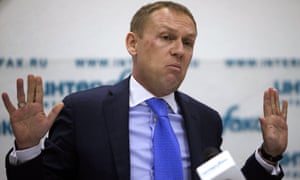
Andrei Lugovoi, a Russian member of parliament who stands accused of the 2006 murder of the former Russian agent, Alexander Litvinenko, said May’s decision to point the finger at Moscow so quickly was “at a minimum irresponsible”.

Quick guide

What is Novichok?


May addressed MPs after chairing a meeting of the national security council, where senior ministers were told that the nerve agent used was from a group known as Novichok.
“Based on the positive identification of this chemical agent by world-leading experts at Porton Down, our knowledge that Russia has previously produced this agent and would still be capable of doing so, Russia’s record of conducting state-sponsored assassinations, and our assessment that Russia views some defectors as legitimate targets for assassinations, the government has concluded that it is highly likely that Russia was responsible for the act against Sergei and Yulia Skripal,” she said.
Advertisement
The prime minister said that left just two plausible explanations for what happened in Salisbury.
“Either this was a direct act by the Russian state against our country. Or the Russian government lost control of this potentially catastrophically damaging nerve agent and allowed it to get into the hands of others.”
She said that Johnson had summoned the Russian ambassador to account for how the nerve agent had been deployed. The UK government demanded a response by the end of Tuesday, she added.
However, May made clear that she believed there was already “a backdrop of a well-established pattern of Russian state aggression” – listing the illegal annexation of Crimea, violating the airspace of European countries, and a “sustained campaign of cyber-espionage and disruption”.

“This has included meddling in elections, and hacking the Danish ministry of defence and the Bundestag, among many others.”
She also spoke of the extrajudicial killing of terrorists and dissidents outside Russia – and the murder of Litvinenko.
The government would consider Russia’s response on Wednesday, she said.
“Should there be no credible response, we will conclude that this action amounts to an unlawful use of force by the Russian state against the United Kingdom,” she said, promising to return to the house with a full range of responsive measures.
“This attempted murder using a weapons-grade nerve agent in a British town was not just a crime against the Skripals.
“It was an indiscriminate and reckless act against the United Kingdom, putting the lives of innocent civilians at risk. And we will not tolerate such a brazen attempt to murder innocent civilians on our soil.”
Advertisement
The tough statement means that a major diplomatic row is now looming between Moscow and London, with expulsions on both sides inevitable. Russia’s hardline ambassador to the UK, Alexander Yakovenko, may well be sent home.
The Labour leader, Jeremy Corbyn, responded by saying the whole house condemned the “deeply alarming attack” and that a full account was needed from Russian authorities. But he warned against a full breakdown of communications with Moscow.
“We need to continue seeking a robust dialogue with Russia on all the issues currently dividing our countries, rather than simply cutting off contact and letting the tensions and divisions get worse and potentially even more dangerous,” he said.
Corbyn then turned to a political attack on the Conservatives, after reports that the party had accepted donations of more than £820,000 from Russian oligarchs since May took over leadership. He also asked why the government had not accepted a Labour-led amendment to the sanctions and anti-money laundering bill that would pave the way for so-called Magnitsky powers to punish human rights abuses with asset freezes and visa bans.

Andrei Lugovoi said May’s decision to point the finger at Moscow was ‘at a minimum irresponsible’.
Pinterest
Andrei Lugovoi said May’s decision to point the finger at Moscow was ‘at a minimum irresponsible’. Photograph: Misha Japaridze/AP
May responded that her government’s simple approach to Moscow was: “Engage but beware.”
Setting out her previous attack on Russian interference in elections, she said: “There can be no question of business as usual with Russia.”
On the Magnitsky powers she insisted that the UK already was able to take tough action against individuals, but did promise to try to reach agreement over the amendment.
In 2007 Gordon Brown kicked out four Russian diplomats in protest at Vladimir Putin’s refusal to extradite Lugovoi and Dmitry Kovtun, the two assassins who put polonium into Alexander Litvinenko’s tea. The Russian foreign ministry expelled four British diplomats.
On this occasion, Putin is likely to react badly to May’s ultimatum. The UK’s ambassador to Moscow, Laurie Bristow – deputy ambassador at the time of Litvinenko’s murder – is vulnerable.
Additionally, the Kremlin may take action against the BBC. When relations plummeted over Litvinenko, Moscow closed the St Petersburg office of the British Council and accused its director, Stephen Kinnock – now a Labour MP – of drink driving.
The use of Novichok – a deadly nerve agent developed in the 1970s and 1980s by the Soviet Union – will be seen as a brutal calling card. It was inevitable that the poison would be discovered, with a trail leading straight back to Moscow.

The timing of the attack was two weeks before Russia’s presidential election, to be held on Sunday. The calculation may be that the Skripal case galvanises Putin’s conservative base and boosts votes.
The reaction of backbench MPs to the statement was largely supportive on all sides of the house. The Tory chair of the foreign affairs select committee, Tom Tugendhat, said that the Salisbury attack was “if not an act of war ... certainly a war-like act by the Russian federation”.
Labour’s Yvette Cooper, who chairs parliament’s home affairs committee, said it was hard to see any alternative to the prime minister’s “very grave conclusion” but asked if any action had been taken to review 14 other cases that she had raised.
In a barbed attack on Corbyn, the Labour MP John Woodcock – a longtime critic of his party leader – welcomed the resilience of May and said the UK would face a national security threat if led by “anyone who did not understand the gravity of the threat which Russia poses”.
The Ministry of Defence (MoD) is planning to accelerate and expand its cyber-offensive capability over the next five years in response to the present crisis with Russia, according to Whitehall sources.
The aim is to increase the UK’s ability to strike back against selected targets inside not only Russia but also other states regarded as hostile such as China, North Korea and Iran.
The MoD is also, in the wake of Salisbury, planning to spend more on chemical, biological, radiological and nuclear (CBRN) defence. The move is an acknowledgement on the part of the MoD that it has paid inadequate attention to the increased danger.
The Guardian

Wednesday, March 07, 2018

Memo to the President on Saudi Arabia

Memo to: President Trump.
From: The U.S. ambassador to Saudi Arabia (if we had one.)
Subject: Saudi crown prince visit

Mr. President, in advance of the visit by Saudi Crown Prince Mohammed bin Salman, a.k.a. M.B.S., I want to share some thoughts:

It’s only a matter of time before King Salman turns over the reins of power to M.B.S., who’s already the effective ruler. M.B.S. is not a democrat, nor is he interested in promoting democracy. He’s a modernizing autocrat. The most we can expect from him is the modernization of Saudi Arabia’s economy and religious/social structure, but given how badly the country has stagnated from years of tentative reforms, this is deeply significant.

M.B.S. is definitely bold. I can think of no one else in the ruling family who would have put in place the profound social, religious and economic reforms that he’s dared to do — and all at once. But I can also think of no one in that family who’d have undertaken the bullying foreign policy initiatives, domestic power plays and excessive personal buying sprees he’s dared to do, all at once. They are two halves of the same M.B.S. package. Our job: help curb his bad impulses and nurture his good ones.

His potential is vast. M.B.S. is trying to forge a societal transformation in Saudi Arabia. Call it “one country, two systems.” For those who want piety, the mosque, Mecca and Islamic education, they’ll all be available and respected. But for those who want modern education and a more normal social life between men and women — and access to Western film, music and the arts — those too will be available and respected. No more religious domination. That is huge.
Because when the Saudi ruling family — feeling the need to demonstrate greater piety after the 1979 takeover by Islamist zealots of the Grand Mosque in Mecca — took Sunni Islam down a much more puritanical path, right when Iran’s ayatollahs did the same with Shiite Islam, they changed the face and culture of Islam. And it was not for the better. The Saudis closed all cinemas, banned concerts and fun, choked off trends for women’s empowerment and modern education and spread an anti-pluralistic, misogynist, anti-Western form of Islam far and wide that created the ideological and financial underpinnings of 9/11, ISIS, Al Qaeda and the Taliban.


Just think of the dollars we’ve spent countering Islamic extremism since 9/11. It’s trillions. Yet we now have a Saudi leader who is not just talking about but actually lifting the ban on women driving; freeing women to go to concerts by Western and Arab rock stars, join the military and more easily start businesses, while sharply curbing the power of the religious police and clerics in daily life; importing Western-style learning systems, reopening cinemas and vowing publicly to bring Islam back to its “moderate” origins; and, most recently, lifting the law that a Saudi woman who sought a divorce, and went to live with her parents, had to return to her husband if he demanded.

He even got the clerics to green-light “expressions of love” on Valentine’s Day for the first time.

If Saudi women are empowered (which will be fully true only when the rules of “male guardianship” over them are lifted), and the kingdom becomes a more normal, connected and productive society, Saudi Islam will naturally become more moderate and inclusive. Given how Saudi Arabia sets the tone for Islam globally, this will isolate extremists and empower moderates everywhere. Again, huge.

This will take time to play out, though, and reverse the supply chain of extremist books, madrasas and clerics Saudi Arabia exported across the globe — but the whole world will be better for it.
To pull this off requires extraordinary leadership by M.B.S., and an extraordinary team. Alas, here M.B.S. has issues. For starters, he comes from the poorest wing of the ruling family; his father was only governor of Riyadh and was known for being uncorrupted. As a result, M.B.S. grew up with a lot of resentment and disdain for his lazy cousins, who got obscenely rich, along with the big merchants close to them. His anti-corruption campaign was meant to stem the tide of graft, but it also had elements of revenge, and a power and money grab. And he still has 56 wealthy Saudis under house arrest.

He needs to let them all go, shut the whole thing down, create a permanent, transparent anti-corruption court to handle all cases — and get this thing over with. He can’t achieve his economic reforms without global investors — and today there are a lot of foreign (and Saudi) investors asking: 

“If I put money into Saudi Arabia, or partner with a Saudi, can that wealth be confiscated without warning at the Ritz-Carlton?”

Without rule of law there will be never be enough investments or jobs in Saudi Arabia — and without jobs the social reforms will wither and religious extremism will find fertile ground for a comeback.
At the same time, we need to tell M.B.S.: You can be an effective king, with real legitimacy, or you can buy yachts, chateaus and Leonardo da Vincis like your cousins — but you can’t do both. He has to understand he’s becoming an important figure on the world stage, and he needs to cultivate the same reputation his father has — clean, modest, conciliatory.

On the management side, M.B.S.’s team is too small and contains a couple of minister-bullies close to him who are in way over their heads, and who bring out his worst instincts and offer terrible advice — some of which led to his failed overreaches in Yemen, Lebanon and Qatar. And while M.B.S. is a creative reformer, he has a fierce temper. Most of his ministers are afraid to challenge him or give him the candid, caring advice he needs.

These liabilities could undermine all his reforms. So, we need to be regularly engaging with him on all these issues — with wise counsel. But Rex Tillerson is not respected in Riyadh, we have no permanent assistant secretary of state for Near Eastern affairs, and no ambassador. Are you nuts? You need to appoint a James Baker or Dave Petraeus as your special envoy to the Arab Gulf who can help M.B.S. defuse Yemen, end the feuds with neighbors, and focus all his energies on building a Saudi Arabia that is thriving at home and admired by its neighbors. That’s the best bulwark against Iranian expansion.

If M.B.S. chases Iran everywhere, Tehran will sap all his strength; it will be death by a thousand cuts.

 We need to be in his ear regularly with someone he respects, and not just leave him to “the boys’ club” — your son-in-law or other young testosterone-fueled Sunni Arab princes in the Gulf. If you think you can just applaud his anti-Iran stance and religious reforms and all will work out fine, you’re wrong.


But, if I may, President Trump, M.B.S. is a young man, and two-thirds of Saudi Arabia is under 30. They look to America for more than just weapons. They look to us as an example. They watch what we model — so it is more vital than ever that we continue to model the rule of law, respect for institutions, tolerance and pluralism. A special U.S. envoy to Saudi Arabia is necessary now, but keeping America a special example is even more important. You get my point.

Please heed this message,
Your ambassador to Saudi Arabia (if you had one).


Monday, March 05, 2018

When Stars Were Born: Earliest Starlight’s Effects Are Detected

Image
A radio telescope in western Australia that picked up effects of the first starlight in the universe, a mere 180 million years after the Big Bang.CreditCSIRO Australia

It was morning in the universe and much colder than anyone had expected when light from the first stars began to tickle and excite their dark surroundings nearly 14 billion years ago.

Astronomers using a small radio telescope in Australia reported on Wednesday that they had discerned effects of that first starlight on the universe when it was only 180 million years old. The observations take astronomers farther back into the mists of time than even the Hubble Space Telescope can see and raised new questions about how well astronomers really know the early days of the cosmos, and about the nature of the mysterious so-called dark matter whose gravity sculpts the luminous galaxies.

“We have seen indirectly evidence of very early stars in the universe — stars that would have formed by the time the universe was only 180 million years old,” said Judd Bowman of Arizona State, leader of the experiment known as EDGES, for Experiment to Detect Global EoR Signature, in an email. Dr. Bowman and his colleagues published their results in Nature Wednesday.

The presence of stars manifested itself as a telltale dip in the intensity of a bath of radio waves, so-called cosmic microwaves, leftover from the fires of creation itself. The dip meant that cosmic energy was being absorbed by primordial clouds of hydrogen gas that hung over the universe like a fog, but whose atoms had been thrown out of balance by the sudden presence of starlight.


The presence of the dip, at a characteristic wavelength of hydrogen, confirmed earlier predictions from models of how and when the stars were born. But the depth of the dip and the amount of the absorption was a surprise. It suggested that the gas inhabiting the cosmos was only half as hot as astronomers had calculated — only about 3 kelvin above absolute zero, or minus 454 Fahrenheit.
Image
An artist’s rendering of an early star, circa 180 million years after the Big Bang.CreditN.R.Fuller, National Science Foundation
“This is difficult to explain based on our current knowledge and assumptions about astrophysical processes in the early universe,” Dr. Bowman said.

 
One possibility, suggested by Rennan Barkana of Tel Aviv University in Israel, is that the primordial hydrogen could have gotten chilled by interacting with the dark matter that also permeates the cosmos.

“If true, this would be the first clue about the properties of dark matter, beyond its gravitational pull which is how its presence has been inferred,” said Dr. Barkana, who published his idea in an accompanying paper in Nature.

How this all played out was the result of a subtle dance of atomic physics and thermodynamics — the study of heat. In its early days before the stars lit up, the universe was a fog of hydrogen and helium that had been synthesized during the first three minutes of time and that was now basking in the fading heat of the 
 Big Bang.

 
Hydrogen in empty space is prone to radiate radio waves with a wavelength of 21 centimeters. At first the gas and the microwave were in tune with each other, and the hydrogen was emitting just as much as it received from the background radiation bath.

But when the stars began to turn on, ultraviolet radiation from them altered the energy levels of the electrons in the hydrogen atoms, knocking them out of sync with the microwaves — “decoupling” them in the physics vernacular. Since the gas was already physically much colder than the radiation, it began to absorb the 21-centimeter waves from the cosmic background, creating a deficit, or a dip.

The shock was how great a dip that was and thus how much colder the hydrogen was than cosmologists had figured.
Enter cold dark matter.

“The only known cosmic constituent that can be colder than the early cosmic gas is dark matter,” Dr. Barkana wrote in his Nature paper.

Astronomers know that dark matter makes up about a quarter of the universe by weight — way more than atomic matter — from its gravitational effects on stars and galaxies. The leading explanation has been that it consists of clouds of subatomic particles left over from the Big Bang. They’re called wimps, for weakly interacting massive particles, and are hundreds of times as massive as a hydrogen atom. Because these particles are so massive they are also slow, or “cold” in cosmic jargon.

In theory, they should be passing through our bodies and everything else by the millions every second. But over the last three decades increasingly sensitive attempts to detect these particles directly have failed, and theorists are beginning to consider other more complicated models of what they call “the dark sector.”

Now the EDGES observations might have opened a new window into that dark realm. And any progress in identifying dark matter could revolutionize particle physics.

 
The idea that dark matter could have cooled the primordial hydrogen would imply that dark matter particles are only a few times heavier than hydrogen atoms, “well below the commonly predicted mass of weakly interacting massive particles,” Dr. Barkana explained in his Nature paper.

It would mean that radio astronomers have a way of getting a grip on dark matter.

None of this is for certain. Yet. Both Dr. Bowman and Dr. Barkana emphasized that the observations need to be confirmed by other instruments and experiments. The EDGES result was based on averaging observations over the whole sky. But new projects in the works, like the Square Kilometer Array in Australia and South Africa will be able to measure these temperature discrepancies in different parts of the sky and track the different evolution of dark and luminous matter.

A version of this article appears in print on , on Page D3 of the New York edition with the headline: Glimpsing a Cosmic Dawn. Order Reprints | Today’s Paper | Subscribe

Escort Says Audio Recordings Show Russian Meddling in U.S. Election


Image
Alexander Kirillov, left, the organizer of a sex seminar in Thailand, and Anastasia Vashukevich, center, a Belarusian escort, spoke to journalists from a detention center in Bangkok.CreditSakchai Lalit/Associated Press


BANGKOK — A Belarusian escort with close ties to a powerful Russian oligarch said from behind bars in Bangkok on Monday that she had more than 16 hours of audio recordings that could help shed light on Russian meddling in United States elections.

The escort, Anastasia Vashukevich, said she would hand over the recordings if the United States granted her asylum. She faces criminal charges and deportation to Belarus after coming under suspicion of working in Thailand without a visa at a sex-training seminar in the city of Pattaya.

Ms. Vashukevich, who described herself as close to the Russian aluminum tycoon Oleg V. Deripaska, said that audio recordings she made in August 2016 included discussions he had about the United States presidential election with people she declined to identify.

Mr. Deripaska, a billionaire with close ties to Russia’s president, Vladimir V. Putin, also has business ties to Paul J. Manafort, President Trump’s former campaign chairman. Mr. Manafort is under investigation by Robert S. Mueller III, the special counsel looking into the campaign’s connections to Russia.


“If America gives me protection, I will tell everything I know,” Ms. Vashukevich said on Monday. “I am afraid to go back to Russia. Some strange things can happen.”

Her assertion could be easy to disregard were it not for a 25-minute video investigation posted last month on YouTube by the Russian opposition figure Aleksei A. Navalny, which relies heavily on videos and photographs from Ms. Vashukevich.

She and nine people from Russia, Ukraine and Belarus were arrested late last month in Pattaya, a city about 70 miles south of Bangkok known for its adult entertainment scene. Most of those arrested, including Ms. Vashukevich, 21, who also goes by the name Nastya Rybka, are accused of working without a permit. Some are also accused of not having a valid Thai visa.


Image
In a letter addressed to the American consul, Alexander Kirillov requested political asylum for all those arrested in connection with the sex workshop.Creditvia Paulo Yunko

Ms. Vashukevich and Alexander Kirillov, the organizer of the sex seminar, spoke to three reporters while standing behind bars and a mesh screen during visiting hours at the Immigration Detention Center in Bangkok. Immigration officials stopped the interviews midway and told the reporters to leave the facility.

Ms. Vashukevich, wearing a bright green T-shirt with the word “detainee” in Thai, is a long way from the days she spent sailing on a yacht with Mr. Deripaska and his friends, including Sergei E. Prikhodko, a deputy prime minister.


According to her version of events, she was working for a modeling agency when she and several other models were sent to spend time on Mr. Deripaska’s yacht. She later posted photographs and videos on social media showing Mr. Deripaska and Mr. Prikhodko together on the yacht.

Financial records show that companies controlled by Mr. Manafort owed millions of dollars to Mr. Deripaska. During the 2016 presidential campaign, Mr. Manafort offered to give Mr. Deripaska private briefings on the campaign.

Mr. Navalny charged in his video that Mr. Deripaska’s yacht trip was an attempt to bribe Mr. Prikhodko, and that Ms. Vashukevich was one of “several” prostitutes aboard the vessel. In the video, the tycoon and Mr. Prikhodko can be heard discussing Russian-American relations. The video also highlights a book Ms. Vashukevich wrote titled “Who Wants to Seduce a Billionaire.”

Russia has tried to block Mr. Navalny’s video, which had nearly 6.4 million views on YouTube as of Monday. A spokesman for Mr. Deripaska has said the allegations of bribery and prostitutes on the yacht were a “hot story that appears far from being the truth.”

In the interview at the immigration center on Monday, Ms. Vashukevich said that she had often recorded conversations between Mr. Deripaska and his associates, and that she had 16 to 18 hours of recordings, including conversations about the United States presidential election.

“They were discussing elections,” she said. “Deripaska had a plan about elections.”

But, she added, “I can’t tell you everything.”

Some of the conversations were with three people who spoke English fluently and who she thought were Americans, she said.


“It is not only about me,” she said. “It concerns a lot of people in America and other countries.”

Ms. Vashukevich and Mr. Kirillov, who also goes by the name Alex Lesley, are prominent on social media and are considered by some to be publicity seekers.

Ms. Vashukevich took part in a small protest in Moscow last year defending Harvey Weinstein after he faced numerous accusations of sexual abuse.

Standing mostly naked near the American Embassy, she and four other women held signs with slogans such as “Hands Off Harvey” and “Harvey Weinstein Welcome to Russia.”

Ms. Vashukevich said she arrived in Thailand on Feb. 16, and that she was only an observer at the sex seminar but did not work at the event.

Several attendees said that no sex had been involved, and that the multiday training had focused on improving communication and on perfecting the art of seduction.

Those who are taken to the immigration detention center are often on the verge of being deported. But an immigration official said that Ms. Vashukevich and five others taken to the center still faced criminal charges for their part in the seminar. They will be sent back to Pattaya for court proceedings.

Ms. Vashukevich described being held in a crowded cell with more than 100 women and only three toilets. She said a Thai official had asked her to sign a paper saying that she believed she would be safe in Russia, but that she had refused.

In general, people seeking asylum must apply in the country where they hope to take refuge.

A spokeswoman for the American Embassy in Bangkok said she was aware of the arrests but declined to discuss the case or any asylum request.

Mr. Kirillov said that he believed publicity would help protect them. “I think the press makes us a little bit safer because if they killed us in the prison, everyone would know,” he said.

Follow Richard C. Paddock on Twitter: @RCPaddock.
Ryn Jirenuwat contributed reporting.

A version of this article appears in print on , on Page A14 of the New York edition with the headline: From Thai Jail, Escort Says Audio Reveals Russian Meddling in U.S.. Order Reprints | Today’s Paper | Subscribe

A Ranting Old Guy With Nukes


CreditTom Brenner/The New York Times
Imagine that you’re listening to some garrulous old guy in a diner, telling you what’s wrong with the world — which mainly involves how we’re being victimized and taken advantage of by foreigners. You hear him out; after all, there have been approximately 17,000 news analyses telling us that garrulous old guys in diners represent the Real America.

Despite your best efforts to avoid being condescending, however, you can’t help noticing that his opinions seem a bit, well, factually challenged. No, we aren’t experiencing a huge wave of violent crime carried out by immigrants. No, we don’t give away vast sums in foreign aid. And so on down the list. Basically, what he imagines to be facts are things he thinks he heard somewhere, maybe on Fox News, and can’t be bothered to check.

O.K., in general we should be prepared to cut ordinary citizens a lot of slack on such stuff. People have children to care for, jobs to do and lives to live, so we can’t expect them to be policy wonks — although maybe they should have a better sense of what they don’t know.

But what if the ranting, ill-informed old guy who strongly believes things that just aren’t true happens to be the president of the United States?

 
Donald Trump’s declaration that he’s ready to impose tariffs on steel and aluminum is bad policy, but in itself not that big a deal. The really disturbing thing is the way he seems to have arrived at that decision, which apparently came as a surprise to his own economic team.

In the first place, the alleged legal justification for his move was that the tariffs were needed to protect national security. After all, we can’t be dependent for our aluminum on unstable, hostile foreign powers like … Canada, our principal foreign supplier. (Canada is also our biggest foreign supplier of steel.)

The point is that the rationale for this policy was obviously fraudulent, and this matters: It gives other countries full legal license to retaliate, and retaliate they will. The European Union — which is, by the way, a bigger player in world trade than we are — has already threatened to impose tariffs on Harley-Davidsons, bourbon and bluejeans.

Meanwhile, in the days since Trump’s announcement, he’s tweeted out one falsehood after another. And I don’t mean that he’s been saying things I disagree with; I mean that he’s been saying things that are simply, flatly wrong, even according to the U.S. government itself.

He has, for example, declared that we have large trade deficits with Canada; actually, according to U.S. numbers, we run a small surplus. The Europeans, he says, impose “massive tariffs” on U.S. products; the U.S. government guide to exporters tells us that “U.S. exports to the European Union enjoy an average tariff of just three percent.”

These aren’t pesky little errors. Trump — who can get comprehensive briefings on any subject, just by saying the word, but prefers to watch “Fox & Friends” instead — has a picture of world trade in his head that bears as little resemblance to reality as his vision of an America overrun by violent immigrants.

And his notion of what to do about these imaginary problems amounts to no more than a bar stool rant. “Trade wars are good, and easy to win,” he tweeted, where he clearly thinks that “winning” means selling more to the other guy than he sells to you. That’s not how it works.

In fact, even if we could eliminate U.S. trade deficits with tariffs, there would be lots of unpleasant side effects: sharply higher interest rates wreaking havoc on real estate and those with large debts (hello, Jared), and a sharply higher dollar inflicting severe harm on exporters, like many of America’s farmers. And a full-scale trade war would disrupt international supply chains, displacing huge numbers of workers: The U.S. government’s own estimates say that exports to the European Union, Canada and Mexico support 2.6 million, 1.6 million and 1.2 million American jobs respectively.

Will Trump actually follow through on his ranting? Nobody knows. Maybe the adults in the administration, if there are any left, will find some bright, shiny objects to distract him — say, meaningless “concessions” by Canada and Mexico that convince him that he’s won big. But whether or not the trade war actually happens, Trump’s display of belligerent ignorance ought to worry us a lot.

For one thing, talking tough and stupid on trade in itself damages U.S. credibility: If we go around threatening our most important allies with retaliation against policies they don’t even have, how can we expect them to trust us — or support us — on anything else?

Beyond that, is there any reason to believe that Trump’s belligerent ignorance stops with trade? Actually, we know that he’s just as bombastic and clueless (with added racism) when it comes to crime, and there’s no reason to believe that he’s any better on real national security issues.

Listening to a garrulous old guy spout nonsense is annoying in the best of circumstances. But when this particular old guy controls the world’s largest military, nukes included, it’s downright scary.

Follow me on Twitter (@PaulKrugman) and Facebook.
Follow The New York Times Opinion section on Facebook and Twitter (@NYTopinion), and sign up for the Opinion Today newsletter

NYT

Ex-Trump Aide Sam Nunberg Says He Will Refuse Grand Jury Order


WASHINGTON — Sam Nunberg, a onetime Trump campaign aide who recently met with investigators for the special counsel, said on Monday that he was subpoenaed to go before a grand jury on Friday but that he was unlikely to appear or to provide documents he was ordered to hand over.

He indicated he did not know what the special counsel, Robert S. Mueller III, was seeking by ordering him to appear before the grand jury and to turn over a number of documents. There was no way to authenticate the subpoena; Mr. Mueller’s office declined to comment.

Part of the subpoena document, which Mr. Nunberg provided to The New York Times, is dated Feb. 27 and makes no mention of requiring him to appear before the grand jury. It calls only for him to preserve documents from Nov. 1, 2015, through the present related to several people connected to the Trump campaign. They include President Trump; the departing White House communications director, Hope Hicks; the former campaign manager Corey Lewandowski; Stephen K. Bannon, the president’s former chief strategist; Mr. Trump’s longtime bodyguard, Keith Schiller; the former Trump Organization lawyer Michael Cohen; and Mr. Nunberg’s mentor, Roger J. Stone Jr., a longtime confidant of Mr. Trump’s.

“They have requested a ridiculous amount of documents,” Mr. Nunberg said. “Should I spend 30 hours producing these? I don’t know what they have. They may very well have something on the president. But they are unfairly targeting Roger Stone.”


Image
A portion of the subpoena ordering Sam Nunberg to appear before a grand jury.

The subpoena also demands any documents related to Carter Page, a former Trump campaign foreign policy adviser who was secretly surveilled by the Justice Department as part of the Russia investigation, as well as Paul Manafort, the former Trump campaign chairman, and his deputy, Rick Gates. Mr. Manafort has been indicted on a string of money laundering and fraud charges, and Mr. Gates recently pleaded guilty and agreed to cooperate with Mr. Mueller’s investigators.

The list of people from whom Mr. Mueller is seeking information from Mr. Nunberg raises questions about his target, as does the time frame. Mr. Nunberg was fired by Mr. Trump during the summer of 2015 and thus was gone from the campaign in November. And he and Mr. Lewandowski are known to be combatants.

Still, Mr. Nunberg — whose mentor, Mr. Stone, goes by the motto that all press is good press — spent hours on Monday engaged in a media tour with The Times, The Washington Post, CNN and MSNBC, describing his plans to flout the subpoena and professing his lack of concern about what could happen to him.

“I was fired within six weeks” of the campaign’s start, Mr. Nunberg told The Times, despite having “saved” Mr. Trump during a fight with Senator John McCain, Republican of Arizona, that summer after Mr. Trump’s remark that Mr. McCain was not a war hero because he was captured in Vietnam. Mr. McCain was shot down during the war and imprisoned for more than five years in Hanoi, refusing early release even after being beaten repeatedly.

Mr. Nunberg added that the president often sounded “like a moron, but this whole thing is a witch hunt.”

Mr. Nunberg said he anticipated his lawyer, Patrick J. Brackley, would fire him for speaking publicly. Mr. Brackley did not immediately respond to an email asking whether that was the case.

Sarah Huckabee Sanders, the White House press secretary, declined to discuss Mr. Nunberg’s subpoena, noting that he has not worked in the White House.

Mr. Nunberg could avoid appearing before the grand jury if his lawyer sent prosecutors a letter asserting his Fifth Amendment rights not to incriminate himself. If that does not happen, Mr. Mueller’s prosecutors could ask a judge for a bench warrant for Mr. Nunberg’s arrest.

Mr. Nunberg has spoken with the Senate Intelligence Committee in its own investigation into Russian election meddling, according to a person familiar with the matter. He has not spoken with the House Intelligence Committee, according to three of its members. Its own examination of Moscow interference has languished amid partisan infighting.

Mr. Stone, the self-described political dirty trickster who is Mr. Trump’s longest-serving political adviser, was not on the campaign formally. Both Mr. Mueller’s office and congressional investigators have been examining whether he was in contact with Julian Assange, a founder of WikiLeaks, about hacked emails from an account belonging to Hillary Clinton’s 2016 presidential campaign chairman, John D. Podesta, that were posted on the website.

Mr. Stone, asked for comment, said he was not surprised that his information was being sought.

“I was part of the Trump campaign, have been the president’s friend and adviser for decades, and would expect that Mueller’s team would ask for any documents or emails sent or written by me,” Mr. Stone said in a text message. “But let me reiterate, I have no knowledge or involvement in Russian collusion or any other inappropriate act.”

Nicholas Fandos contributed reporting.

Get politics and Washington news updates via Facebook, Twitter and the Morning Briefing newsletter.
A version of this article appears in print on , on Page A14 of the New York edition with the headline: Ex-Trump Aide Says He Will Refuse to Go Before Grand Jury. Order Reprints | Today’s Paper | Subscribe

Twitter Updates

Search This Blog

Total Pageviews